PIA Sold to Private Sector - Inside Pakistan’s Biggest Aviation Privatization (2025)
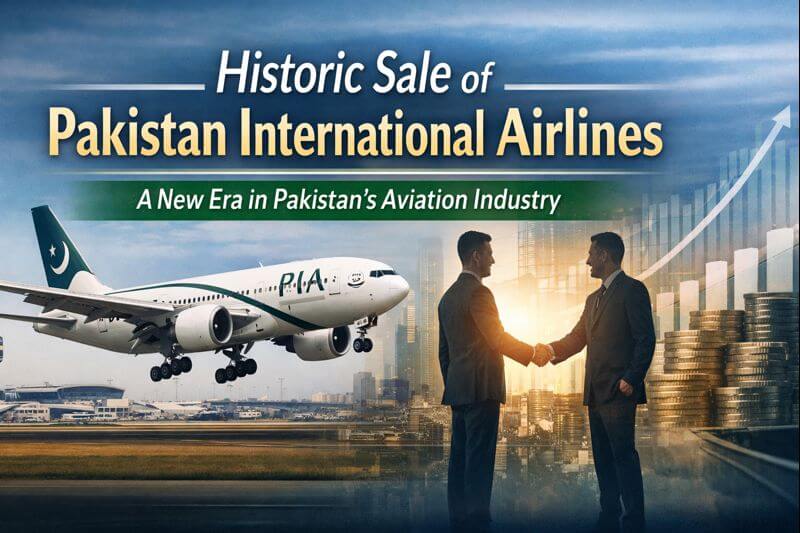
PIA Sold to Private Sector - Inside Pakistan’s Biggest Aviation Privatization(2025)
The sale of Pakistan International Airlines(PIA) in 2025 marks the end of an era that began shortly after Pakistan’s independence.For decades, PIA stood as a national symbol, once admired across Asia and the Middle East for its service quality, pilot training, and international reach.However, years of financial losses, political interference, and operational decline turned the airline into one of the country’s biggest economic burdens.
In late 2025, the Government of Pakistan completed the long - awaited privatization of PIA, transferring majority ownership and management control to a private consortium.This move has sparked strong reactions across the country, ranging from hope and optimism to anger, skepticism, and fear of job losses.
This article explains what led to the sale , how the deal happened , who bought PIA , what it means for passengers and employees , and why the privatization remains controversial .
The Rise and Fall of PIA
PIA was founded in 1946 and became Pakistan’s national airline in 1955. In its early decades, it was considered one of Asia’s most respected carriers.PIA helped establish Emirates Airline, trained foreign pilots, and operated routes that many regional airlines could not.
However, by the late 1990s and early 2000s, problems began piling up:
- Political appointments in management
- Overstaffing and weak accountability
- Poor financial planning
- Aging aircraft and safety concerns
- Heavy reliance on government bailouts
Over time, PIA became a loss - making entity.Billions of rupees were injected repeatedly just to keep it operational.Despite occasional improvement attempts, no government managed to fix the core issues.
Why the Government Decided to Sell PIA
By 2024 - 2025, PIA’s situation became financially unsustainable.
Mounting Debt
PIA’s total liabilities crossed Rs 600 billion , including loans, unpaid dues, and legacy obligations.Servicing this debt was draining public funds that could have been used for health, education, or infrastructure.
IMF Pressure
Pakistan’s agreement with the International Monetary Fund(IMF) included strict conditions to reduce losses from state - owned enterprises.PIA was repeatedly highlighted as a prime example of inefficiency.
Failed Reforms
Multiple restructuring plans failed over the years.Without private control, political interference continued to undermine progress.
Faced with these realities, the government concluded that privatization was the only remaining option .
Preparing PIA for Privatization
Selling PIA was not simple.The airline’s debt and reputation made investors hesitant.To attract serious bidders, the government took several steps:
- Separated most of PIA’s legacy debt from the sale
- Offered tax and regulatory incentives
- Assured management control to the buyer
- Guaranteed temporary job protection for employees
- Improved compliance after the EU aviation ban was lifted
These steps were designed to make PIA commercially viable again.
The Bidding Process Explained
In December 2025, the privatization process reached its final stage.The government offered 75 % ownership of PIA , along with full management control.
Qualified Bidders
Several groups showed interest, but only a few met the strict pre - qualification criteria.These included:
- A consortium led by Arif Habib Group
- A consortium led by Lucky Cement
- Airblue , a private airline
Reserve Price
The government set a reserve price of Rs 100 billion , signaling that PIA would not be sold cheaply.
Final Auction
After sealed bids and open bidding rounds, the Arif Habib Group consortium emerged as the highest bidder , offering Rs 135 billion for the 75 % stake.
This officially ended PIA’s status as a state - controlled airline.
Who Bought PIA ?
The winning consortium is led by Arif Habib Corporation , one of Pakistan’s most prominent investment groups.Other partners include companies from sectors such as:
- Finance
- Real estate
- Education
- Manufacturing
The government retained a minority stake, while operational control shifted fully to the private owners.
Where Will the Money Go ?
One of the most misunderstood aspects of the deal is the distribution of funds.
- Only a small portion of the sale price goes directly to the government
- The majority of the amount is reinvested into PIA itself
- Funds are expected to be used for:
- Fleet modernization
- Aircraft leasing or purchase
- Route expansion
- Service quality improvement
- Technology upgrades
Supporters argue this reinvestment model gives PIA a real chance at recovery.
What Changes for Passengers ?
For travelers, privatization could bring noticeable changes:
Potential Improvements
- Better on - time performance
- Improved in -flight service
- Competitive pricing
- Modern booking and digital systems
- Expanded international routes
Possible Risks
- Reduction in loss - making domestic routes
- Higher ticket prices on certain sectors
- Focus on profit over national connectivity
The true impact will depend on how responsibly the new management balances profit and public service.
Impact on Employees and Jobs
PIA employs thousands of workers, making job security one of the biggest concerns.
Short - Term Protection
As part of the agreement, employees are protected from layoffs for an initial period.
Long - Term Reality
Analysts believe workforce restructuring is unavoidable.PIA has long been criticized for overstaffing, and private management typically prioritizes efficiency.
This has raised fears of:
- Downsizing
- Voluntary separation schemes
- Changes in contracts and benefits
Employee unions have expressed strong reservations and warned of protests if rights are violated.
Criticism and Public Backlash
Despite being hailed as “historic,” the sale has faced intense criticism.
“National Asset Sold”
Many argue that PIA is a national symbol that should not have been sold, especially during economic hardship.
Transparency Concerns
Critics question whether the airline’s true value was reflected in the sale price and whether all details were made public.
Fear of Monopoly
Some fear that private ownership could reduce competition and hurt consumers.
Trust Deficit
Decades of controversial privatizations have left the public skeptical, fearing mismanagement or favoritism.
Debate: Was Privatization the Right Decision ?
Arguments in Favor
- Ends continuous taxpayer burden
- Reduces government debt pressure
- Brings professional management
- Aligns with global aviation practices
- Improves efficiency and competitiveness
Arguments Against
- Loss of national control
- Risk of job losses
- Profit over public service
- Long - term fare increases
- Emotional and symbolic loss
This debate reflects a deeper divide in Pakistan’s economic thinking.
What This Means for Pakistan’s Economy
The PIA sale is more than just an airline transaction.
It signals:
- Commitment to IMF reforms
- Willingness to reduce state control
- Potential roadmap for privatizing other SOEs
- Improved investor confidence
However, failure to turn PIA around could weaken trust in future privatization efforts.
What Happens Next ?
Immediate Phase
- Transition of management
- Operational audits
- Financial restructuring
Medium Term
- Fleet renewal decisions
- Route profitability analysis
- Service upgrades
Long Term
- Possible rebranding
- Strategic airline partnerships
- Expansion into profitable international markets
The next 2 - 3 years will determine whether this decision is remembered as a bold success or a costly mistake.
Last note: End of an Era, Beginning of a Test
The privatization of Pakistan International Airlines is one of the most significant economic decisions in the country’s recent history.It closes a chapter defined by national pride but also chronic mismanagement.At the same time, it opens a new chapter filled with uncertainty, opportunity, and responsibility.
PIA’s future now depends not on government bailouts, but on business discipline, transparency, and customer trust.Whether this move saves the airline or merely changes its ownership will be judged by results, not promises.
For Pakistan, the sale of PIA is not just about aviation.It is a test of whether the country can finally reform institutions that have held its economy back for decades.
More Similar Blogs

Gaurav Taneja (Flying Beast): From IIT Engineer to India's Aviation Vlogger - Complete Biography 2025
Comprehensive biography of Gaurav Taneja (Flying Beast), India's premier aviation and fitness vlogger with 9.3+ million subscribers, exploring his journey from IIT Kharagpur engineer to commercial pilot, whistleblower against AirAsia's safety violations, fitness icon, family man with pilot wife Ritu Rathee, the 2024 marriage crisis that shocked fans, and his multifaceted impact on Indian digital content creation.

Prajakta Koli (MostlySane): India's YouTube Queen - Complete Biography 2025
Comprehensive biography of Prajakta Koli, known as MostlySane, exploring her journey from radio jockey to becoming one of India's most influential digital creators with 7+ million subscribers, her transition to acting, UNICEF advocacy, impact on Indian youth culture, and her role in shaping the creator economy in India.

Brothers Vlog: Pakistan's Food and Travel Phenomenon - Complete Biography 2025
Comprehensive biography of Brothers Vlog, Pakistan's second-largest YouTube channel with 20.6+ million subscribers, exploring their journey from humble beginnings to becoming the nation's premier food and travel content creators, their unique brotherhood dynamic, viral food challenges, cultural impact, and unprecedented success in Pakistani digital media.